

Miriana Ferrara
University of Salerno
The world is facing increasing challenges: climate change, resource scarcity, inequality, and economic uncertainty. Traditional models of industrial growth (i.e., Industry 4.0), rooted in efficiency and automation, have proven not to be adequate to address these urgent issues. In this context, Industry 5.0 has emerged as a paradigm shift that redefines the relationship between humans, technology, and sustainability.
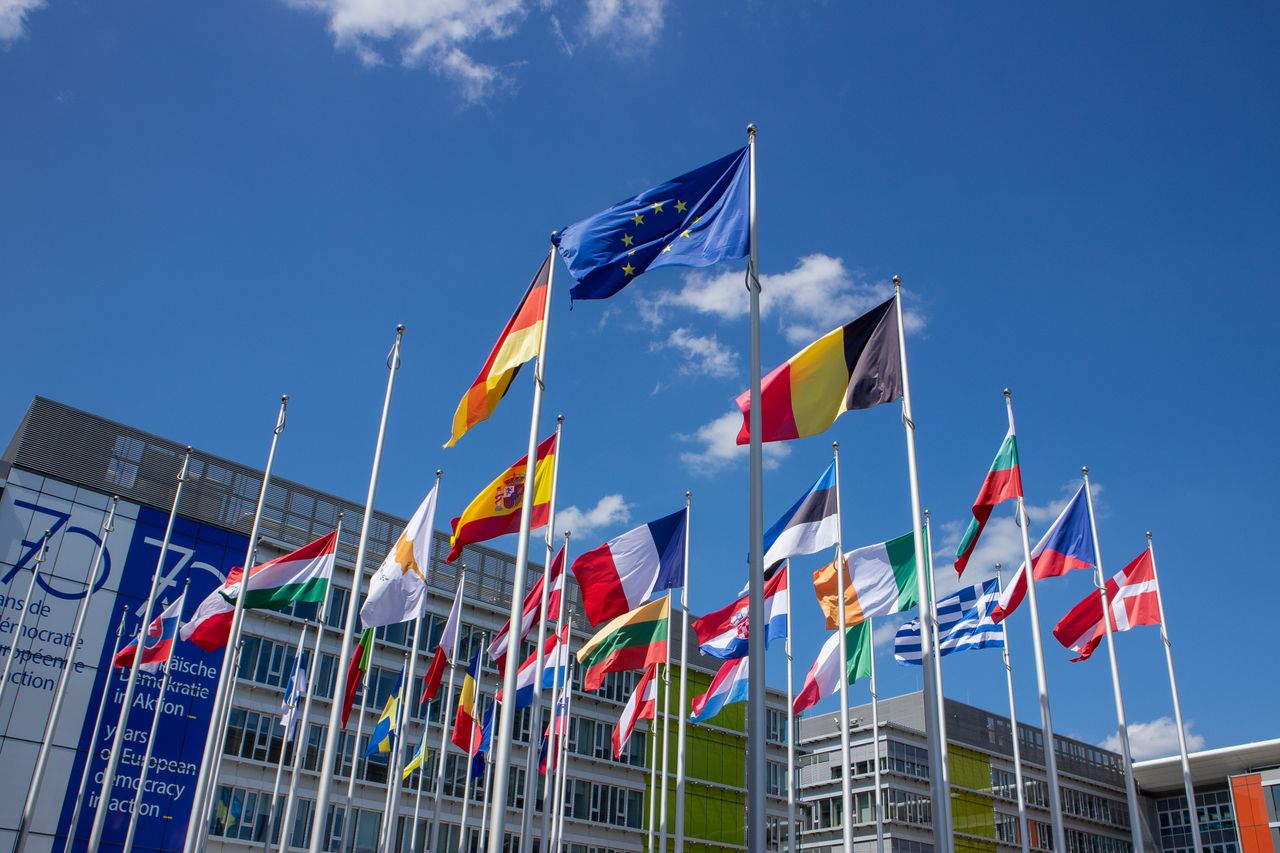
The European Commission introduced the concept of Industry 5.0, framing it as a paradigm that places human well-being and sustainability at the centre of industrial transformation. It suggests a future where human creativity and machine efficiency coexist, where industries serve not only economic growth but also social inclusion and business resilience.
Although Industry 5.0 was introduced in 2021, it is still struggling to clearly define and act on how Industry 5.0 can be shaped within organisations, including what it really means for companies and how it translates from theory to practice.
What Research Tells Us: Industry 5.0
Several academic review articles have been published in recent years about Industry 5.0. More precisely, by selecting “Industry 5.0” as a research string in the Scopus database, and cleaning the results, the analysis revealed a noteworthy total of no fewer than 57 papers published between 2021 and 2025. This evidences the increasing rate of articles with a focus on this topic.
Among these articles, Ciasullo and Ferrara (2025)* adopted the TCCM framework to scrutinise literature about Industry 5.0, then highlighting Theories, Characteristics, Contexts, and Methodologies. Even if they particularly focused on the intersections between Industry 5.0 and sustainability, the results confirmed the exponential growth of academic interest towards Industry 5.0.
Moreover, the application of the TCCM framework revealed a conceptual dominance of papers discussing Industry 5.0. Indeed, among the most adopted methodologies, it clearly emerged that theoretical or review papers represented over half the studies, with relatively few empirical applications. These studies explored the benefits and the challenges of this paradigm as well as called for understanding the right skills to develop to embrace it. In other words, there is unanimity regarding the power of Industry 5.0, but all ask “So what? How to embrace Industry 5.0? Which are the skills to do it?”
The Challenge: No Toolkit, No Roadmap
Actually, one of the striking features of Industry 5.0 is its lack of boundaries.
Unlike Industry 4.0’s focus on automation, efficiency and efficacy, Industry 5.0 came up with the aim of making organisations sustainable, resilient and human-centric.
Unlike Industry 4.0 which was strongly tied to concrete technologies, such as big data, IoT, robotics to implement its objectives, Industry 5.0 does not come with a standard toolkit. There is no single checklist for becoming an “I5.0 company.”
In Industry 4.0, the skills required were relatively clear: expertise in data analytics, robotics, and digital infrastructure; in Industry 5.0, the situation is different. Data and technology skills remain a conditio sine qua non – necessary but not sufficient. They enable the use of advanced technologies but do not by themselves capture what it means to embrace Industry 5.0.
Why? Because Industry 5.0 is not defined by the tools, but it is a wide concept that is rooted in values, for which it is less important to understand what technology can do than what technology should do for people and the planet. It recognises organisations as key actors in shaping the sustainability of the future and calls them in action.
Accordingly, there is no universal roadmap for organisations seeking to become 5.0.
Industry 5.0 can be seen as an inspirational principle that shapes the strategic orientation of an organisation, one that drives its vision and its organisational behaviour. It sets a guiding horizon.
Indeed:
- It changes the strategic assets of the firm, putting sustainability, resilience, and human well-being at the heart of value creation.
- It redefines strategic goals, which can differ between companies: one organisation might aim for resilience in supply chains, while another might prioritise workplace innovation, and yet another may focus on sustainability and circular economy practices.
- It transforms the role of skills. Instead of being set in advance, the required capabilities arise from the chosen strategic direction.
Why Thinking 5.0 Matters
We might name this inspirational principle Thinking 5.0.
- Thinking 5.0 is not a toolkit. It is a mindset that encourages organisations to rethink the purpose of industry, putting people and sustainability at the center.
- Thinking 5.0 is not about predefined skills. It is about aligning strategy with values, then identifying the skills that will serve that vision.
- Thinking 5.0 is not a single pathway. It allows for plural expressions: greener production, human-centered workplaces, resilient business models, or all of the above.
Framing Industry 5.0 as Thinking 5.0 has two advantages. First, it clarifies why there is no one-size-fits-all roadmap: because 5.0 is not prescriptive, it is aspirational. Second, it empowers companies to own their transformation journey, designing approaches that reflect their unique contexts, cultures, and goals.
Conclusion
Industry 5.0 matters because it shifts the conversation. It tells us that industry cannot be reduced to machines, algorithms, and data streams. It must serve human well-being, societal inclusion, and environmental resilience.
But its true value lies not in providing a detailed map but in offering a new mindset. It pushes organisations toward a new horizon, without dictating the path to get there.
For this reason, it may be more accurate to think of Industry 5.0 not as a fully defined paradigm, but a concept that inspires, shapes culture, and guides strategic choices (that we may call Thinking 5.0). Industry 4.0 told us what technologies to use. Thinking 5.0 asks us what kind of future we want to create and how technology can help us get there.
Miriana Ferrara is a research fellow at the Department of Business Management and Innovation Systems, University of Salerno, Italy. She earned her PhD in Big Data Management with a dissertation on conceptualizing and empirically shaping Industry 5.0 in the waste management sector. Her research focuses on digital transformation, sustainability, and business innovation, with particular attention to dynamic capabilities and data-driven models. She has presented her work at leading international conferences such as EURAM, EISIC, and IFKAD, and published in journals including Global Business & Organizational Excellence and British Food Journal as well as book chapters in Springer volumes. Miriana collaborates with international research groups and serves as a reviewer for leading academic journals. She is also a member of recognized scientific societies including SIMA, SIM, AIDEA, and EURAM.
References
*Ciasullo, M. V., & Ferrara, M. (2025). The Nexus Between Sustainability and Industry 5.0: A Hybrid Systematic Review and Future Research Agenda. Global Business and Organizational Excellence, e70000.
Related articles
September 28, 2026
September 20, 2026
September 19, 2026
September 19, 2026
September 19, 2026