
Reflections on the BRIDGES 5.0 Final Conference
Brussels: 2nd October 2026
Introduction
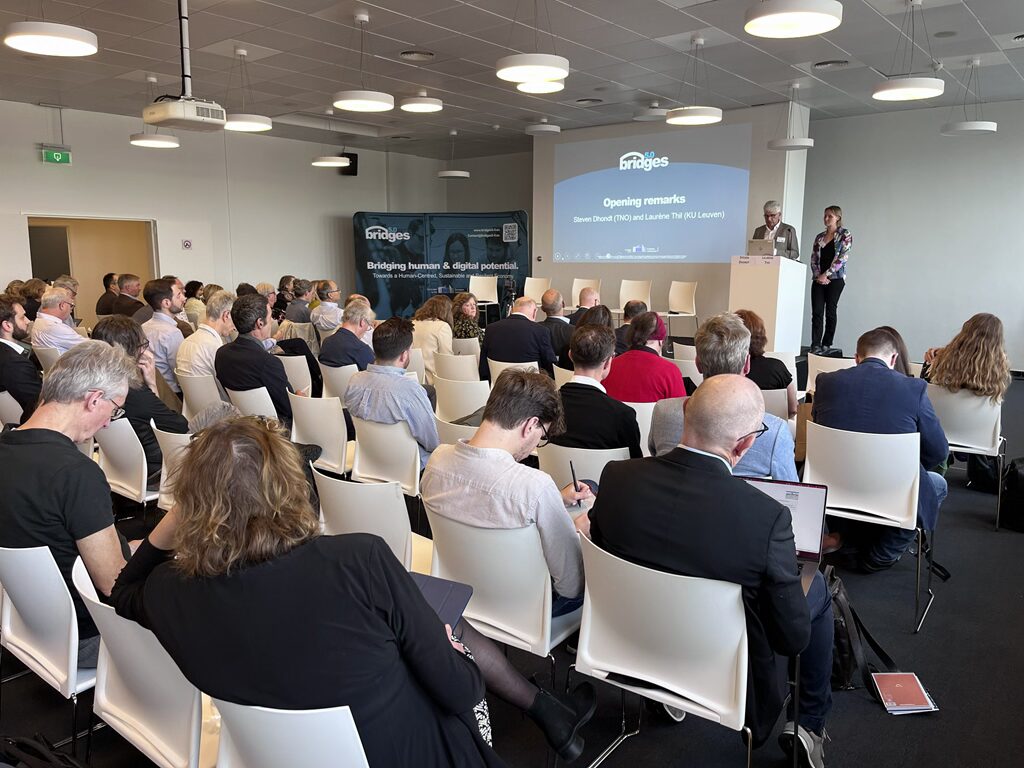
Industrial transformation has always involved competing perspectives: technological optimism and realism, efficiency and social justice, and the promise of innovation and workers’ day-to-day experiences. The BRIDGES 5.0 final conference brought these tensions into sharp focus. Rather than simply presenting findings, it highlighted the issues that will determine whether Industry 5.0 becomes a substantive paradigm shift or another phase in Europe’s continuing industrial renewal.
What emerged was not a single, straightforward narrative, but a complex and sometimes contradictory discussion about the future of work. This may be precisely what Europe needs: recognition that industrial transformation is not a linear process, but a contested field in which technology, democracy and human agency must be negotiated.
The Opening: Technology’s Limited Delivery of the Promised Future
Steven Dhondt’s opening remarks were notably candid. Europe has invested billions in digitalisation, automation and advanced manufacturing, yet transformation has not occurred as policymakers anticipated. As he put it, “Bridges 5.0 shows it is not just a tech question, it’s the organisational, social and democratic choices that are made.”
This statement challenges the prevailing assumption that technological investment naturally produces progress. Dhondt’s argument suggests that Europe has treated technology as though it will automatically deliver productivity, competitiveness and resilience. However, he emphasised that technology remains ineffective without the organisational capacity to deploy it well.
This perspective reframes the debate. Rather than asking only how technological adoption can be accelerated, it is necessary to consider who shapes that adoption, under what conditions, and for whose benefit.
Judith Kirton-Darling: The Political Heart of Industry 5.0
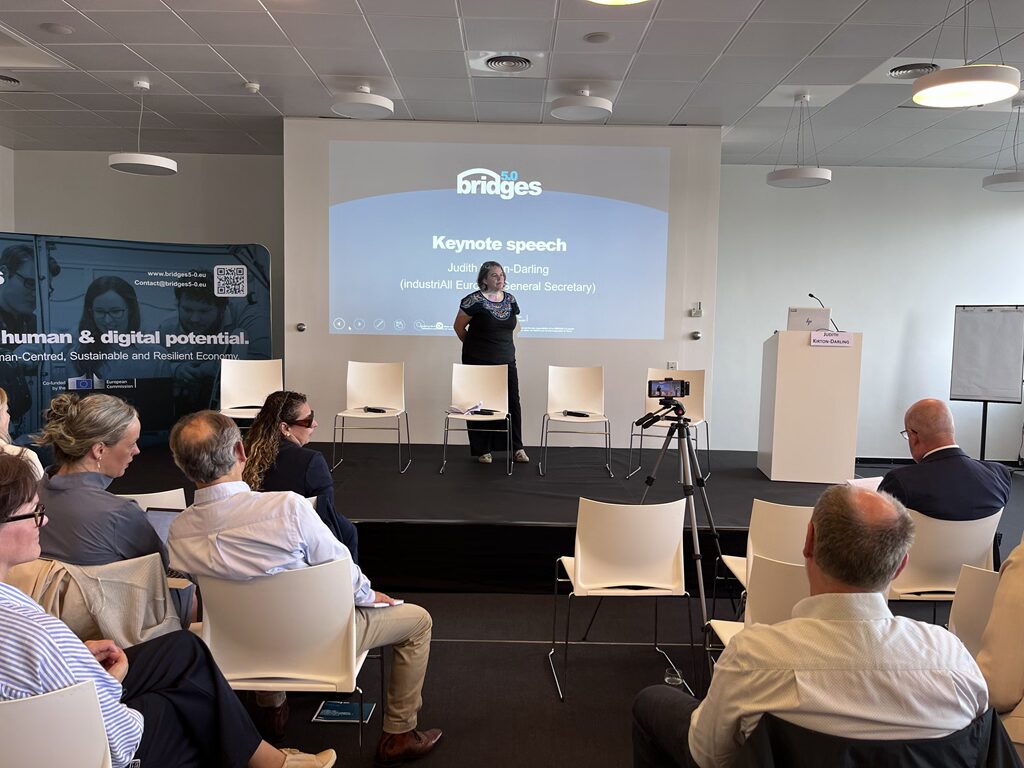
Judith Kirton-Darling’s keynote provided a strong foundation for the conference. Rather than simply endorsing Industry 5.0, she critically examined the assumptions that have shaped industrial policy for decades.
She began by challenging the assumptions underpinning Industry 4.0. Automation, connectivity and smart factories were expected to usher in a new era of prosperity. They did deliver improvements: “They have improved production processes…strengthened competitiveness…created new opportunities for innovation.” However, they also demonstrated a more fundamental point: technology does not determine social outcomes; choices do.
Her argument was explicitly political. She maintained that the future of European industry depends not only on technological capability, but also on democratic governance. Workers require power, voice and rights, not as supplementary ethical considerations, but as structural necessities. Without industrial democracy, Industry 5.0 risks becoming a rebranded version of Industry 4.0.
A particularly significant element of her intervention was the call for a human‑in‑command principle for AI. Algorithms may advise, but humans must retain decision-making authority. Without safeguards, she warned, AI could facilitate surveillance, work intensification and deskilling. The principal risk lies less in speculative scenarios than in routine managerial misuse.
Kirton-Darling’s speech reframed Industry 5.0 as a question of agency. The issue is not whether Europe will adopt AI, but who will control its deployment.
Learning Capacity: The Missing Ingredient in Industrial Transformation
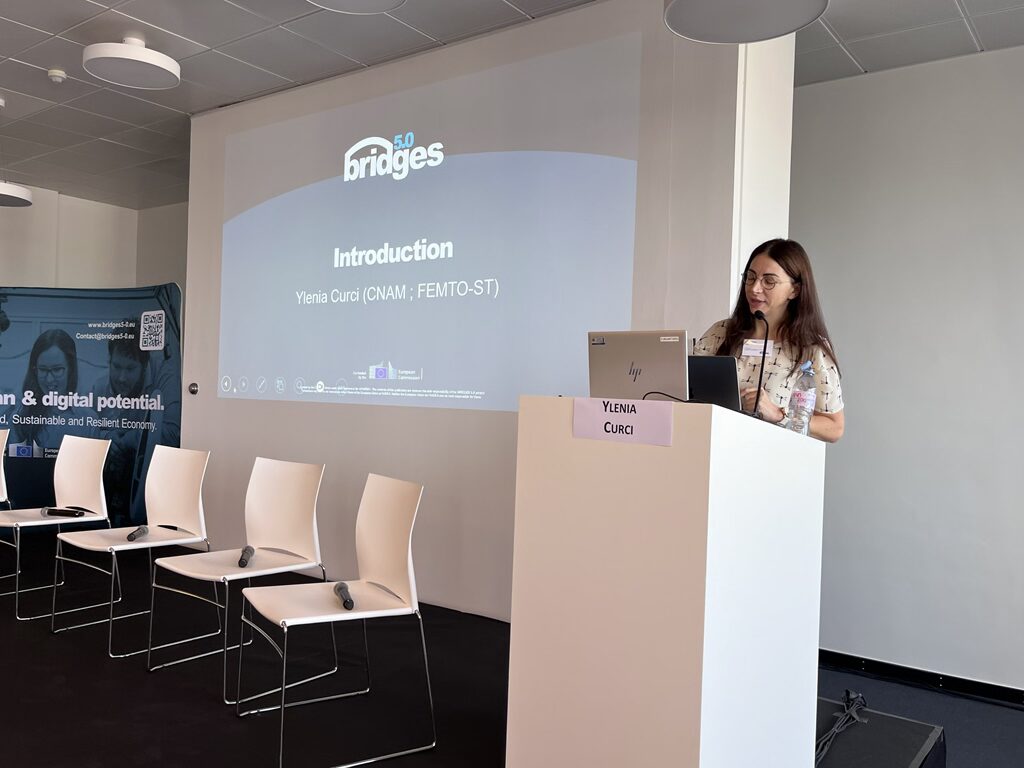
Ylenia Curci’s contribution introduced a concept that reshaped the wider discussion: the learning capacity of organisations. Her central argument was that technology alone does not transform workplaces; organisational learning is essential.
She contrasted two approaches to human-centricity:
- The matrix vision, where workers are treated as cognitive tools to be plugged into production systems.
- The EU vision, where workers are in control of machines and job quality is central.
The distinction is significant. The matrix vision treats human-centricity primarily as a means of improving organisational performance, whereas the EU vision presents it as a societal objective. Curci’s argument indicates that Industry 5.0 is concerned not only with empowering workers, but also with safeguarding human agency amid accelerating technological change.
Industry 5.0 requires organisations to move beyond a purely technology-driven approach and embrace human-centred workplaces where digital technologies support people rather than replace them.
Organisational learning is a strategic capability, not simply a training function. Companies that systematically enable people to learn, share knowledge and solve problems collaboratively are better equipped to respond to technological, environmental and market change. Building learning capacity can therefore generate mutual benefits: employees gain skills, autonomy and development opportunities, while organisations strengthen innovation, resilience and performance.
The broader implication is that the future competitiveness of European industry depends not only on advanced technologies but also on the ability of firms to create environments where people can learn continuously, contribute ideas and develop new capabilities.
Experiential Training: The Promise and the Barriers
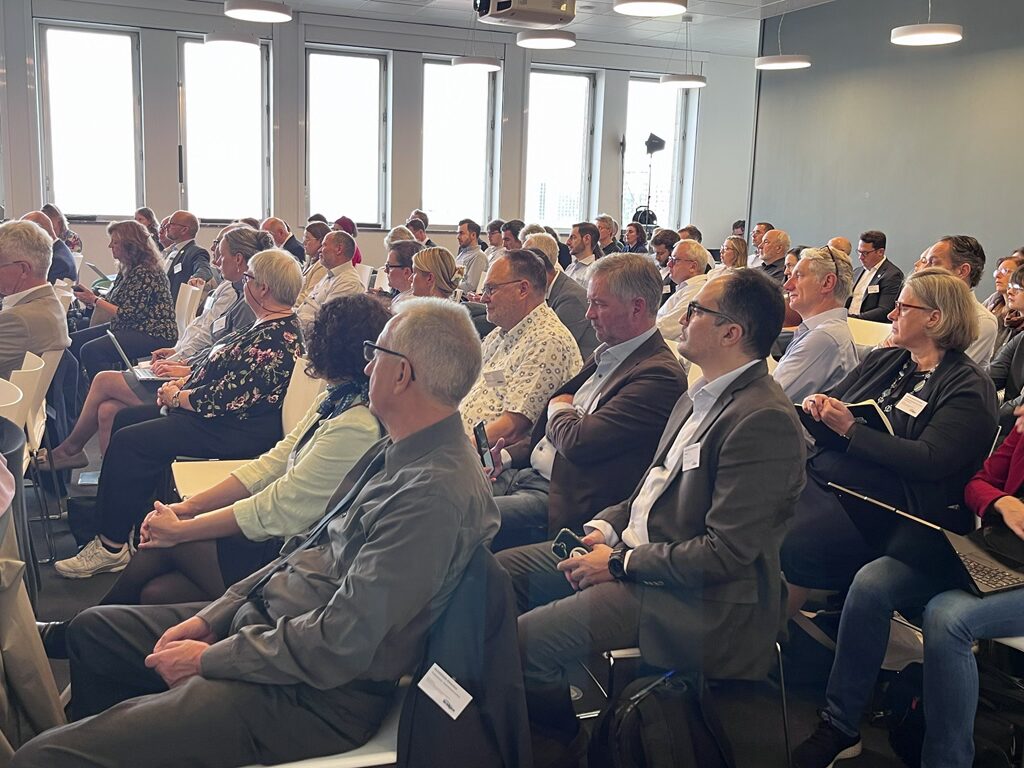
Experiential learning through teaching and learning factories (TLFs) has played a central role in BRIDGES 5.0 because it connects skills development with the practical challenge of work organisation. By locating learning in real or simulated production settings, these approaches allow participants to test ideas, reflect on experience and examine the organisational implications of new technologies. Their relevance to Industry 5.0 lies in making human-centric transformation tangible: rather than training people merely to adapt to technology, they enable workers and managers to shape its use together, connecting individual development with organisational learning capacity and participative workplace innovation.
The discussion of teaching and learning factories nevertheless revealed a practical tension: companies recognise the value of experiential learning, but often struggle to implement it.
Participants identified a persistent gap between support for experiential training in principle and the practical demands of embedding it in everyday organisational life.
- Cost was an immediate concern. Teaching and learning factories require more than an initial investment in equipment and facilities: they also bring continuing demands for maintenance, updating and specialist support. For many organisations, especially those operating under tight financial constraints, these recurring commitments can make experimentation appear difficult to justify.
- Cultural resistance proved equally significant. Established routines, familiar hierarchies and organisational inertia can all work against new forms of learning, particularly when experimentation challenges accepted ways of organising work. Even where the technical case is persuasive, change can falter if people are not given the confidence, permission and practical space to work differently.
- Managerial disengagement and resistance emerged as perhaps the most consequential obstacle. As one contributor observed, “The challenge is primarily managerial rather than technical.” Experiential learning depends on leaders who are willing to sponsor experimentation, tolerate uncertainty and act on what employees discover. Without that active commitment, even well-designed initiatives risk remaining peripheral pilots rather than becoming part of the organisation’s normal way of working.
- Lack of time for experimentation or, in other words, lack of leadership commitment.
These barriers point to a broader issue: Industry 5.0 requires organisational transformation, not merely technological adoption. Such transformation is gradual, politically contested and frequently challenging.
The discussion also highlighted a measurement gap. Companies have KPIs for sustainability, but almost none for human-centricity or resilience. As one speaker noted, the closest thing to a human-centric KPI is the question: “How do you feel?”
This example is revealing. Europe cannot operationalise Industry 5.0 without credible measures of the outcomes it seeks to achieve.
Scaling Industry 5.0: The Politics of Narrative
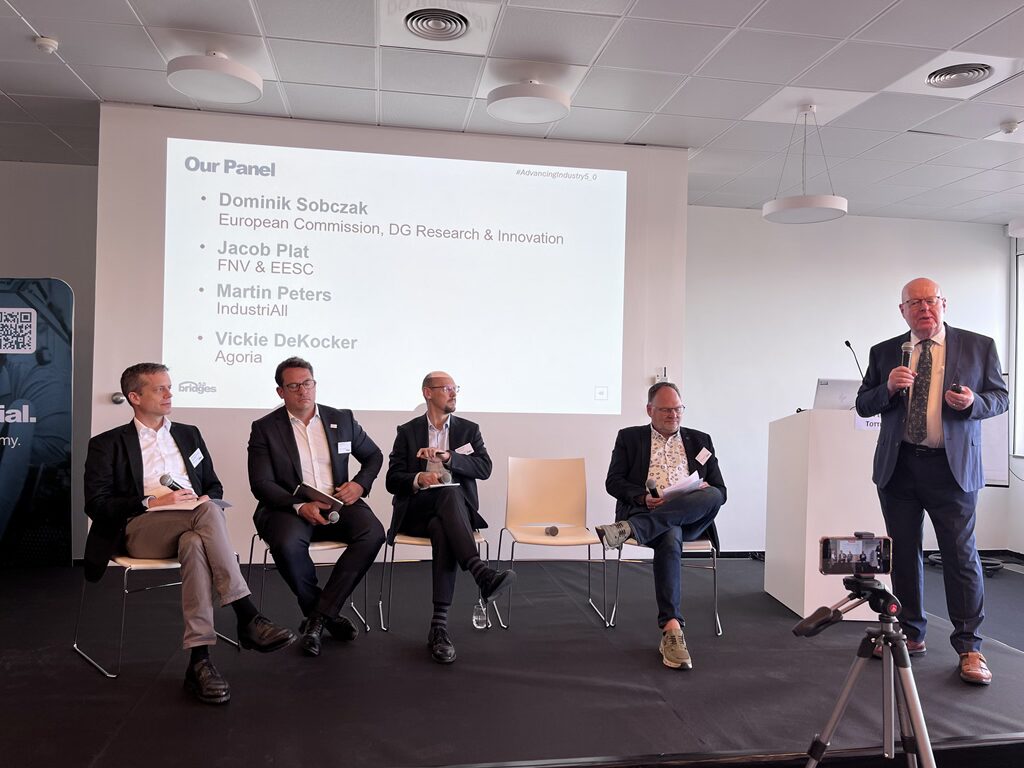
The panel on upscaling identified a fundamental contradiction: although the pillars of Industry 5.0 are widely accepted, the concept itself remains politically fragile.
The moderator observed that the European Commission’s commitment to workplace innovation has historically fluctuated, with “strong commitment followed by long periods of indifference”. Dominik Sobczak (DG R&I) acknowledged that “the term Industry 5.0 did not make peoples’ careers in European policy making.” Nevertheless, he maintained that its three pillars have become embedded in the Commission’s thinking, even when the terminology is absent from official documents.
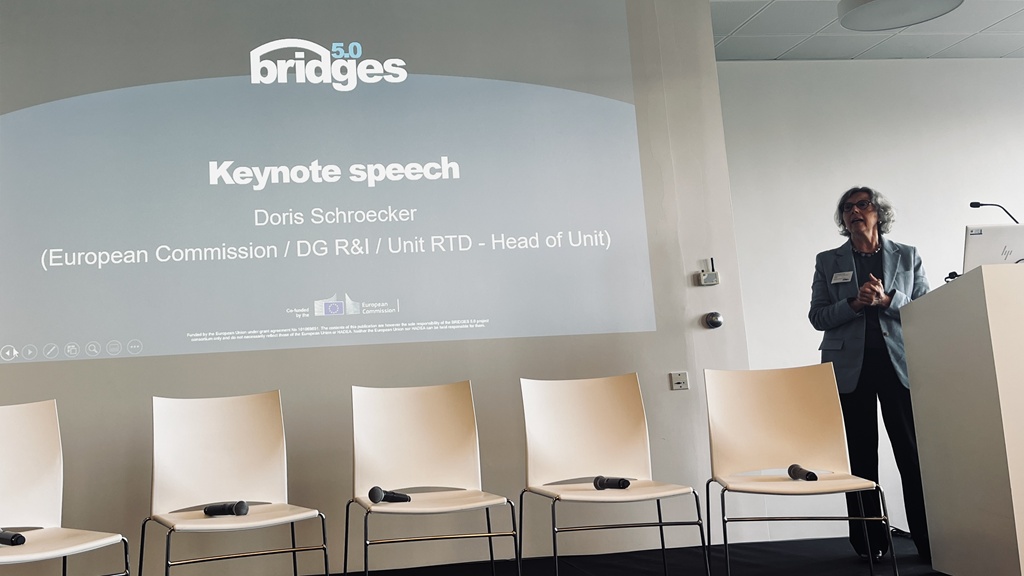
The discussion framed a deeper institutional tension that Doris Schroecker later addressed directly, albeit with characteristic diplomatic precision. Her intervention acknowledged, without defensiveness, that Industry 5.0 itself emerged during one of those “high‑commitment” phases: a moment when the Commission was actively searching for a narrative capable of reconnecting technological development with European values. Her message was subtle but unmistakable: Industry 5.0 is not a fixed programme but a value‑based orientation that must continually be defended as political priorities shift.
This raises a strategic question: does Industry 5.0 require a stronger narrative, or should its principles be embedded within other policy frameworks?
Martin Peters offered a more practice-oriented perspective. He argued that workers increasingly perceive “transformation” as a threat rather than an opportunity, associating it with job loss, surveillance, work intensification and opaque decision-making. In this context, Industry 5.0 cannot be scaled through top-down directives or promotional strategies. It requires trust, which cannot be established through legislation alone.
Peters emphasised that worker involvement must entail genuine co-creation rather than tokenistic consultation. Surveys, workshops and engagement platforms are insufficient unless workers have meaningful influence over technological decisions. Otherwise, Industry 5.0 risks becoming another managerial narrative that promises empowerment while reinforcing control. His intervention therefore framed scaling as a social and democratic challenge rather than a purely technical one.
Roland Sommer offered a pragmatic counterpoint. He argued that Europe does not require new structures to scale Industry 5.0; it already has clusters, hubs, innovation networks and sectoral alliances capable of advancing the agenda. The central challenge is alignment.
Sommer insisted that Industry 5.0 must speak the language of companies, emphasising planet, people and profit in that order. Firms will not adopt Industry 5.0 because it is conceptually elegant; they will adopt it because it helps them navigate regulatory pressure, labour shortages, sustainability demands and geopolitical uncertainty. His message was clear: scaling requires embedding Industry 5.0 into existing ecosystems, not building parallel ones.
A recurring theme across the panel was that Industry 5.0 has strong principles but an insufficiently developed narrative. Although it resonates with researchers, social partners and progressive policymakers, it has not yet secured broad engagement among industry leaders or national governments.
This narrative gap creates a strategic risk. Without a compelling account of its relevance, Industry 5.0 may be overshadowed by more prominent agendas, including digital competitiveness, green industrial policy and strategic autonomy. As Schroecker indicated, values alone cannot sustain a policy orientation; they must be continually articulated and politically defended.
What became increasingly clear throughout the conference is that Industry 5.0 still lacks a compelling value proposition, in other words a clear articulation of what it offers that existing industrial narratives do not. The pillars of human‑centricity, sustainability and resilience are widely endorsed, yet they remain abstract unless translated into tangible benefits for companies, workers, policymakers and society.
Several speakers hinted at this gap: firms will not adopt Industry 5.0 because it is normatively attractive, but because it helps them solve real problems such as labour shortages, technological complexity, regulatory pressure, organisational inertia and the need to retain skilled workers. Without a concrete value proposition that demonstrates how Industry 5.0 improves performance, strengthens innovation, reduces risk and enhances job quality, the concept risks being perceived as an ethical aspiration rather than a strategic advantage. In this sense, Industry 5.0 must move beyond principles and become a practical offer, a way of doing business that is not only morally grounded but economically persuasive. Bridges 5.0 has contributed original evidence and insights to support a stronger value proposition, but overall the task remains as work-in-progress.
The panel made clear that scaling Industry 5.0 is therefore not a technical exercise. It is a political, cultural and organisational struggle. It requires champions inside the Commission, advocates among social partners, and credible examples from industry. It requires projects like BRIDGES 5.0 not only to generate evidence but to sustain pressure. The Industry 5.0 Community of Practice and the Industry 5.0 Platform on Fresh Thinking Labs should also have key roles to play in this respect.
In summary, scaling Industry 5.0 depends less on passive diffusion than on deliberate coalition-building.
Doris Schroecker: The Commission’s Strategic Perspective and Its Limitations
Where Kirton-Darling articulated the political case for Industry 5.0, Doris Schroecker presented its institutional context. As a senior figure in the European Commission’s research and innovation leadership, her intervention situated the debate within the realities of EU policymaking.
Schroecker’s contribution was measured but significant. She reminded participants that Industry 5.0 was never intended as a narrow industrial strategy. It emerged from the Commission’s effort to articulate a European vision of technological development grounded in values as well as competitiveness. In her account, Industry 5.0 provides a corrective to the technological determinism of Industry 4.0 by reorienting innovation towards societal needs, human dignity and long-term resilience.
But Schroecker also acknowledged a political reality: Industry 5.0 has struggled to gain traction as a policy label. The three pillars are widely accepted, but the term itself has not embedded deeply in EU industrial policy. This is not because the ideas lack merit, but because the policy ecosystem is crowded, fragmented and often driven by short-term competitiveness narratives.
Her intervention highlighted a central tension: Industry 5.0 is both ambitious and politically vulnerable. It seeks to reshape Europe’s industrial future, yet must compete with more established narratives such as green industrial policy, digital competitiveness and strategic autonomy. In practice, however, Industry 5.0 can provide an organisational framework that connects these policy objectives.
Schroecker’s presence at the conference was a reminder that Industry 5.0 is not just an academic or social partner initiative. It is part of a broader institutional struggle over what Europe’s industrial future should look like, and whether values can genuinely shape technological development.
Skills: The Flow Problem
If Industry 5.0 is founded on human-centricity, skills should be among its clearest priorities. Europe has well-developed education systems and extensive vocational training infrastructures. Yet the conference highlighted a persistent paradox: Europe may face not only shortages of particular skills, but also a broader problem of skills utilisation.
Peter Dickinson captured this point succinctly by arguing that Industry 5.0 requires the measurement of practices, not only technologies. Skills create value when they are used, shared and embedded in organisational routines. Europe has become effective at developing skills, but less effective at ensuring that they circulate within workplaces.
This echoes Judith Kirton-Darling’s warning that “A worker who receives training but has no influence over how technology is deployed is not empowered.” Skills without agency represent unrealised potential.
The Ecosystem Challenge
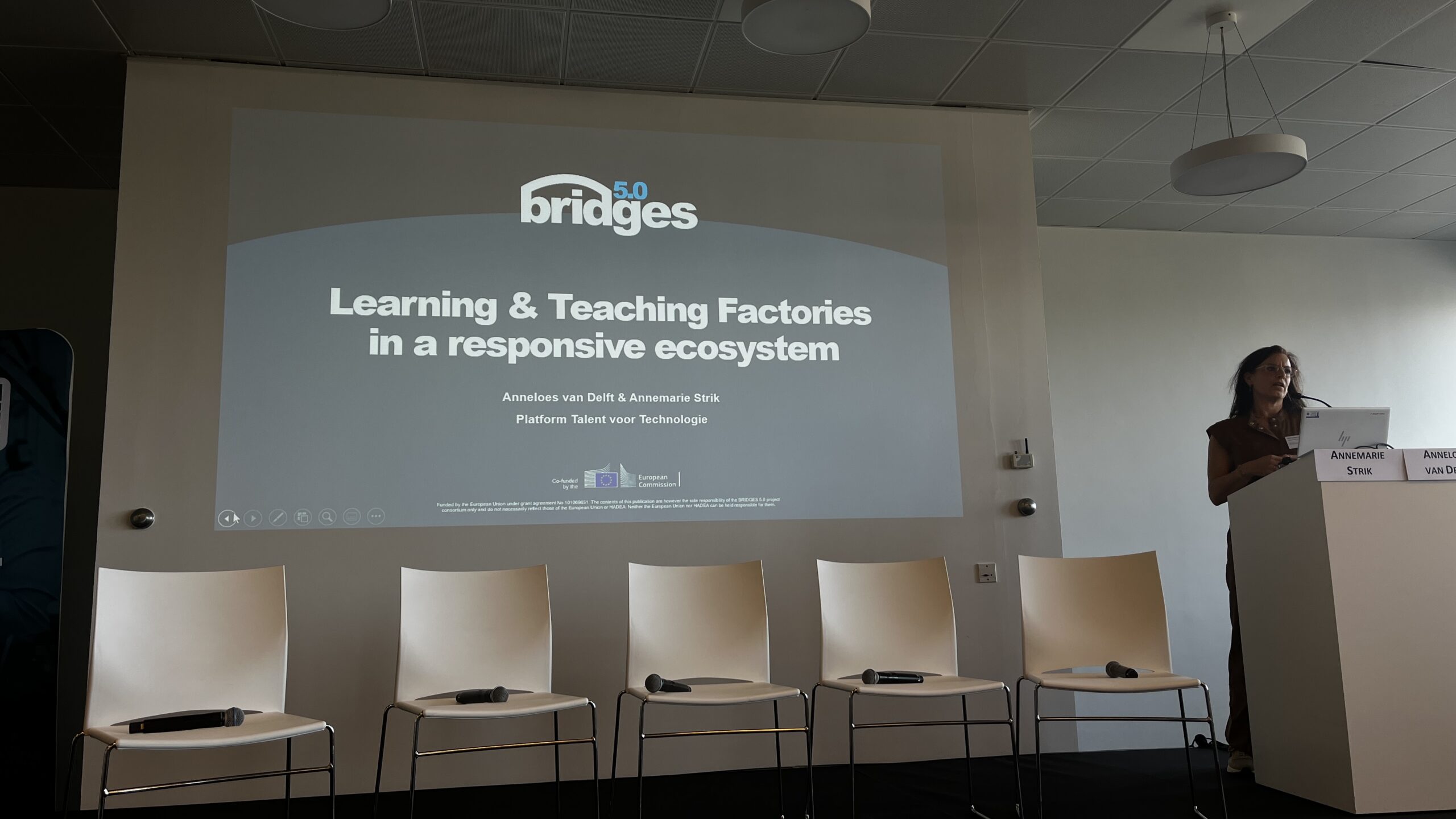
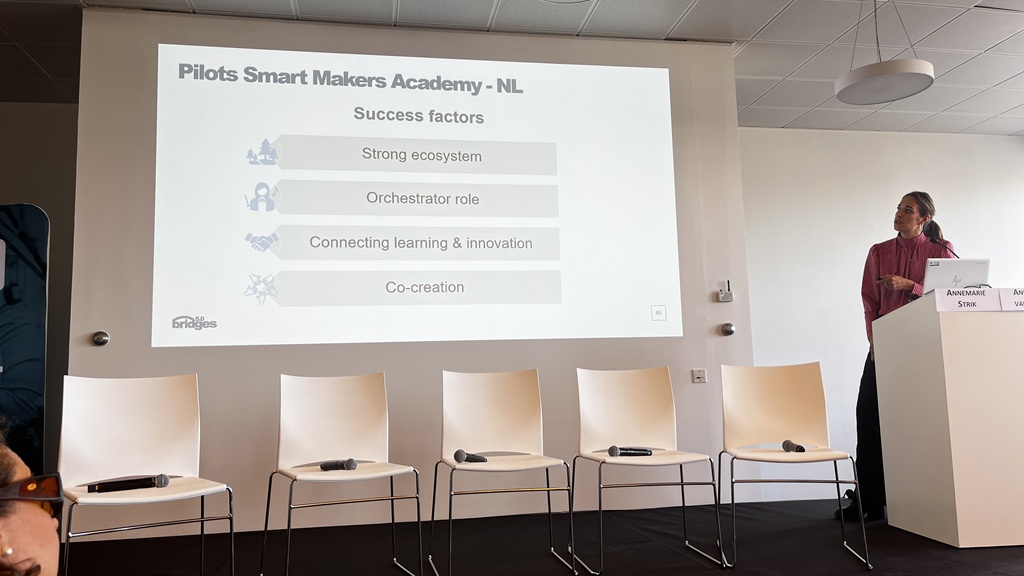
Annemarie Strik and Anneloes van Delft offered a constructive perspective by shifting attention from individual firms to regional learning ecosystems. Their argument was that skills do not circulate automatically within the economy; they require structured pathways, shared infrastructure and coordinated governance. Skills flow is therefore an ecosystem issue, not solely a training issue.
They showed how regional ecosystems can align learning with industry needs when training providers, companies, social partners, technology developers and public institutions work together. In these settings, learning becomes a collective endeavour rather than a transactional service. Workers can move between roles, firms can share training resources, and innovation can spread more evenly across sectors.
Strik and van Delft also emphasised that such ecosystems do not emerge spontaneously. They require neutral brokers capable of mediating between competing interests, limiting the dominance of individual firms and ensuring that learning serves wider societal goals. Without these intermediaries, ecosystems may become fragmented, politicised or dominated by the most influential participants.
Their examples illustrated that ecosystems are not simply networks, they are governance structures. They coordinate expectations, distribute responsibilities and create shared norms around learning and innovation. This is why ecosystems matter so much for Industry 5.0: they embody the principle that transformation is not an individual or organisational act but a collective capability.
In this sense, the ecosystem challenge is directly tied to Industry 5.0’s resilience agenda. A resilient region is one where skills can move across sectors, where workers can transition between roles without falling through the cracks, and where learning is continuous rather than episodic. Ecosystems provide the connective tissue that allows skills to circulate, adapt and evolve, something that no single firm can achieve alone.
The Organisational Bottleneck
Several speakers also identified a more challenging issue: managerial commitment is often the principal bottleneck. Workers may be willing to learn and training providers ready to deliver, but without managerial engagement, new skills are unlikely to be integrated into practice.
This is why experiential learning in the form of teaching factories, learning factories and hybrid training models has received such a strong emphasis during the life of the Bridges 5.0 project. These approaches embed learning directly into production environments, forcing managers to confront the organisational implications of new skills and thereby stimulating participative workplace innovation.
Skills flow is also cultural. In many firms, learning is still seen as remedial rather than developmental. Workers may fear that training signals inadequacy; managers may worry that empowered workers will challenge existing hierarchies. These subtle barriers undermine the human‑centric ethos of Industry 5.0.
Here, Ylenia Curci’s distinction between individual learning and learning capacity becomes crucial. Industry 5.0 requires organisations that can absorb and use knowledge, not simply workers who accumulate it.
The Policy Blind Spot
Finally, the skills flow problem exposes a policy blind spot. European skills policy has historically focused on supply, with more courses, more qualifications and more upskilling. But Industry 5.0 demands a shift toward skills utilisation. Policymakers must ask not only whether workers have skills, but whether workplaces are structured to use them.
This aligns with Doris Schroecker’s reminder that Industry 5.0 was designed to reconnect innovation with European values. Skills utilisation is one of those values: it reflects a belief that workers’ knowledge should shape technological development, not merely respond to it.
Chris Warhurst summarised the challenge with clarity: “It’s not enough to put people into the education system. We need to ensure their skills are used.”
Industry 5.0 cannot succeed if skills remain trapped in training centres or individual CVs. They must flow into teams, decision‑making processes, technological design and organisational strategy. Solving the skills flow problem is not a technical task but an organisational, cultural and political one. It requires new forms of collaboration, new managerial mindsets and new policy priorities.
The Future: Unresolved Tensions and Emerging Questions
The final panel did not seek to impose a simple resolution. Instead, it brought into focus tensions that had characterised the discussions throughout the conference. These were not merely issues for future research; they raised fundamental questions about language, responsibility, technological purpose and participation that will influence whether Industry 5.0 develops into a credible programme for change.
- The language gap
A persistent challenge is the absence of a shared vocabulary between managers and workers. Terms such as innovation, transformation, flexibility and efficiency may carry different meanings depending on an individual’s position within an organisation. What senior leaders describe as an opportunity may be experienced by employees as work intensification, uncertainty or loss of control. This language gap does more than complicate communication: it can result in priorities being misunderstood and concerns being dismissed before meaningful dialogue begins. If Industry 5.0 is to be advanced through co-creation, organisations will need forums in which competing interpretations can be expressed and a shared account of change negotiated.
- Learning vs learning capacity
Curci’s distinction between learning and learning capacity clarified questions of responsibility. Learning may occur at the individual level, but the capacity to support, share and apply that learning belongs to the organisation. Employees can acquire new knowledge, but it has limited transformative value when workloads prevent reflection, hierarchies discourage challenge or managers fail to act on new ideas. This shifts attention from the expectation that workers continually adapt to the conditions created by firms themselves. It also raises an important question: should firms assume greater responsibility for learning? Within Industry 5.0, learning cannot remain a private obligation imposed on individuals; it must become integral to the design and governance of work.
- AI adoption without purpose
Aída Ponce’s warning about generative AI gave this concern immediate practical relevance. Many companies are introducing new tools without first defining the problem they are intended to solve, explaining why workers should use them, or assessing how they might improve job quality. Adoption then becomes an objective in itself, driven by technological fashion or competitive pressure rather than a considered organisational purpose. Workers are expected to accommodate the technology while exercising limited influence over its selection, design or use. This reflects an Industry 4.0 approach presented in Industry 5.0 terms: technology leads, while human needs and democratic choices are considered afterwards. A genuinely human-centric approach would begin with the experience of work and identify where AI can add value without diminishing agency, judgement or trust.
- Missing voices
The discussion also exposed the narrowness of the constituency that still tends to define Industry 5.0. Manufacturing remains central, but the consequences of technological and organisational change extend far beyond the factory. A broader conversation must therefore include:
- service sectors, where digitalisation is already reshaping relationships between workers, organisations and the public;
- SMEs, which often face different constraints from large firms and cannot simply import models designed for well-resourced corporations;
- middle management, whose role in translating strategic ambitions into everyday practice is frequently overlooked;
- children and pupils, who will inherit the workplaces being designed today and whose education will influence their capacity to shape them;
- cities and regions, where industrial, social and educational policies meet and where transformation is ultimately experienced.
Including these voices is not simply a matter of representation. Each group brings distinct constraints, knowledge and possibilities for action. Without them, Industry 5.0 risks remaining a specialist discussion among policymakers, researchers and leaders of large organisations rather than becoming a practical framework shaped by the people and places most affected by industrial change.
The Discussion Continues
The conference has concluded, but the discussion—and the work required to translate ideas into practice—must continue.
Join the Industry 5.0 Platform on Fresh Thinking Labs to share experiences, explore the questions raised here and connect with others working towards human-centric, sustainable and resilient workplaces. In addition to opportunities for dialogue and peer learning, the platform offers case studies, articles, videos and other practical resources to support the implementation of Industry 5.0.
Contribute your challenges and insights, and help shape the next phase of this work. For further information and details of how to join, visit https://industry5-0.net
Acknowledgements
The BRIDGES 5.0 Final Conference required considerable vision, planning, organisation and coordination from the team at KU Leuven, particularly Allison Dunne, Karolien Lenaerts and Laurène Thil.
Steven Dhondt (KU Leuven and TNO) provided the intellectual leadership for both the conference and the wider BRIDGES 5.0 initiative. We also thank the entire BRIDGES 5.0 team for its sustained contribution over the past four years.
Author: Peter Totterdill (Workplace Innovation Europe), drawing on an AI-assisted analysis of notes and transcripts recorded during the conference.
Conference Programme and Speakers
| Time | Session |
|---|---|
| 08:45 – 09:15 | Registration and welcome coffee |
| 09:15 – 09:30 | Opening remarks: The Journey of BRIDGES 5.0 By Steven Dhondt (TNO) and Laurène Thil (KU Leuven) |
| 09:30 – 10:00 | Keynote by Judith Kirton-Darling (industriALL) – 20 min Q&A – 10 min |
| 10:00 – 10:15 | The learning capacity of the organisation: A win-win strategy for Industry 5.0 By Ylenia Curci (CNAM) |
| 10:15 – 11:15 | Session 1: Learning from practice Speakers: Alexios Papacharalampopoulos (LMS), Unai Ziarsolo (TKNIKA) Panellists: Antonius Schroeder (TUDO), Unai Elorza (Mondragon), Frank Krause (TNO), Alfio Minissale (Comau) Moderator: Matteo Fedeli (Infineon) |
| 11:15 – 11:30 | Coffee break |
| 11:30 – 12:30 | Session 2: Shaping the future together: upscaling Industry 5.0 and the role of the Community of Practice Panellists: Dominik Sobczak (RTD); Jacob Plat (FNV member of the EESC); Martin Peters (IndustriAll); Roland Sommer (Plattform Industrie 4.0) Moderator: Peter Totterdill (Workplace Innovation Europe) |
| 12:30 – 13:30 | Lunch & networking |
| 13:30 – 14:00 | Keynote by Doris Schroecker (European Commission – DG R&I) Q&A |
| 14:00 – 14:45 | Session 3: Industry 5.0 workforce skills Speakers: Anneloes van Delft (PTvT) and Peter Dickinson (University of Warwick) Panellists: Christian Foelzer (Bau-Holz Trade Union), Sabrina R. Sorko (FH JOANNEUM Graz), Isabel Sobrino Mate (Ceemet) Moderator: Chris Warhurst (University of Warwick) |
| 14:45 – 15:15 | Session 4: The BRIDGES 5.0 Project book launch Speakers: Peter Oeij (TNO), Linda Clarke (WBS) Moderator: Allison Dunne (KU Leuven) |
| 15:15 – 16:15 | Closing panel: The future of Industry 5.0 Panellists: Bart Vandesande (Atlas Copco), Cristian Matti (JRC–EC), Angels Orduna (A.SPIRE), Mehtap Akguc (ETUI) Moderator: Diane Confurius (TNO) |
| 16:15 – 16:30 | Closing remarks By Steven Dhondt (TNO) and Karolien Lenaerts (KU Leuven) |
Related articles
November 24, 2026

October 11, 2026

September 28, 2026

September 20, 2026

September 19, 2026