
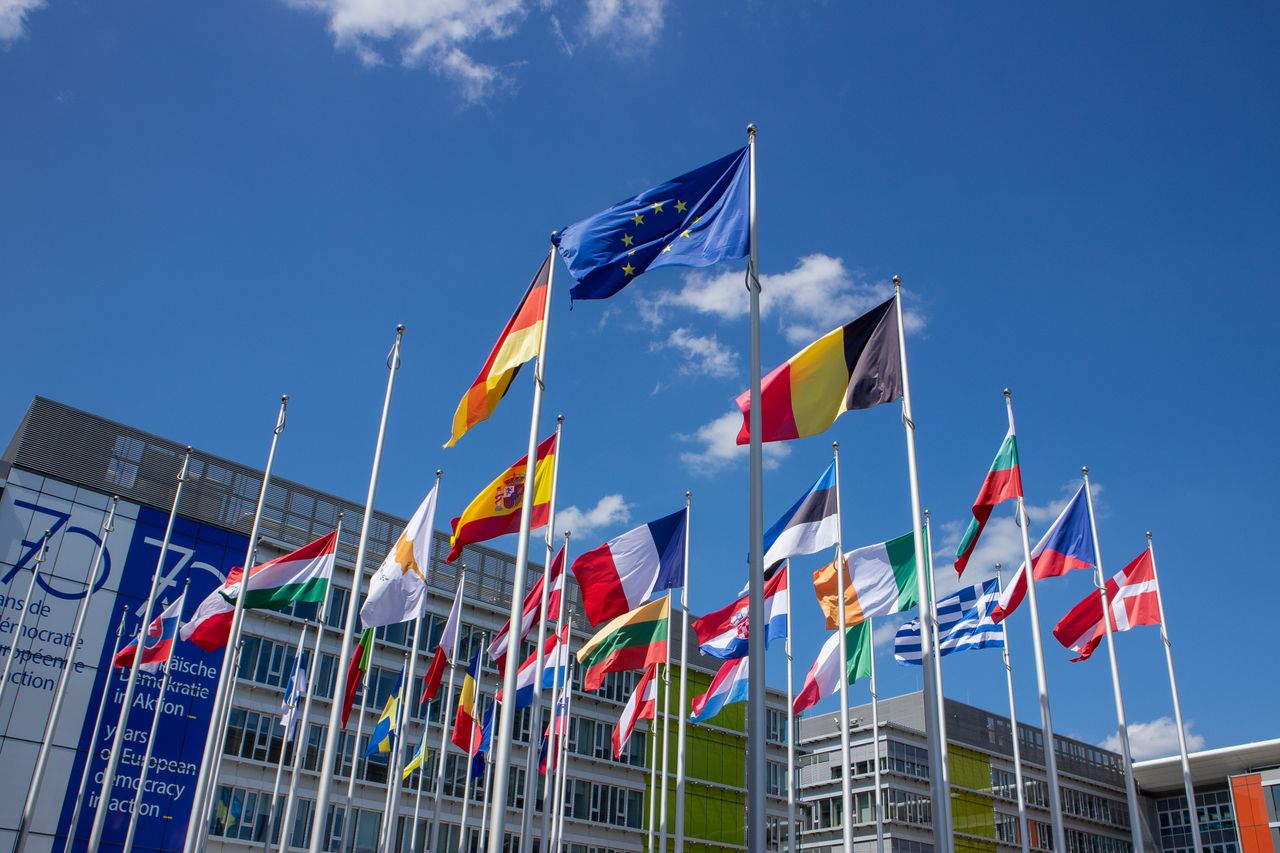
Ursula von der Leyen’s 2026 State of the Union address did not make Industry 5.0 its headline theme. Yet its central message — a more independent, resilient and socially grounded Europe — closely reflects the agenda’s core ideas.
A new industrial story for Europe
Europe’s industrial debate has long been shaped by the language of innovation, competitiveness and productivity. Industry 4.0 captured that agenda through its focus on digitalisation, automation and data-driven manufacturing. Industry 5.0 takes the conversation further. It asks not only how technology can make industry more efficient, but how industry can better serve people, communities and the planet.
From dependence to resilience
In her address, von der Leyen framed Europe’s future around a powerful idea: the continent must be able to forge its own path. That means reducing exposure to external shocks, ending dependence on Russian fossil fuels, strengthening strategic industries and ensuring that Europe remains a serious trading power in a turbulent world.
This is where the connection with Industry 5.0 becomes clear. Resilience is no longer a narrow supply-chain concern; it is becoming a defining principle of European industrial policy. Energy security, climate action and industrial capability are being treated as parts of the same challenge. A sustainable economy is also a stronger one, and a more self-reliant Europe needs industries that can adapt, innovate and withstand disruption.
The social model is part of the strategy
Just as importantly, the speech linked industrial transformation to Europe’s social model. That matters. Too often, competitiveness is discussed as if it requires a trade-off with good work, social protection or democratic stability. The Industry 5.0 lens challenges that assumption. It argues that people are not simply the recipients of technological change; they must be active participants in shaping it.
Von der Leyen’s warning about the speed of technological change reinforces this point. Artificial intelligence, robotics and data-driven systems are changing the workplace and the wider public sphere. The question for Europe is not whether these technologies will be adopted, but how they will be governed. Industry 5.0 offers a useful answer: technology should augment human capability, support better jobs and strengthen democratic resilience rather than undermine them.
Naming the agenda
The address may not have used the phrase Industry 5.0, but it brought many of its themes into the political mainstream: human-centred innovation, industrial resilience, sustainability and technological sovereignty. For those working with the concept, this creates an opportunity. Rather than presenting Industry 5.0 as a specialist policy label, it can be communicated as a practical way of understanding Europe’s emerging industrial direction.
In that sense, the 2026 State of the Union offers more than a set of policy signals. It points to a broader European story: one in which industrial success depends on skilled people, resilient systems, cleaner energy and the confidence to shape technology in line with democratic values. That is Industry 5.0 in all but name — and it may be the clearest way to explain where Europe’s industrial policy is heading.
Related articles
September 28, 2026
September 20, 2026
September 19, 2026
September 19, 2026
September 19, 2026