
The challenge
The course already delivered solid Industry 4.0 technology skills, but its modules did not always connect into a coherent end-to-end view of modern manufacturing. Human-centricity, resilience, and sustainability were not consistently built into tasks, reflection, or assessment, and students needed more challenge-based, interdisciplinary work that mirrors how production problems are solved in real teams.
Approach
Who was involved
The pilot brought together learners from the “Smart Manufacturing” VET specialisation (EQF Level 5), VET teachers and company trainers, and innovation stakeholders such as TKNIKA — working with partner companies across the Basque region.
What they did
The pilot upgraded the programme by embedding three Industry 5.0 principles — human-centricity, resilience, and sustainability — into both the curriculum and the Learning Factory experience.
To make the shift practical, the team first clarified the Industry 5.0 competencies the programme should develop, then redesigned Learning Factory activities supported by tools like AR, IoT and simulation, and finally adapted company internships so students experienced Industry 5.0 technologies and working practices in real environments.
How it was delivered
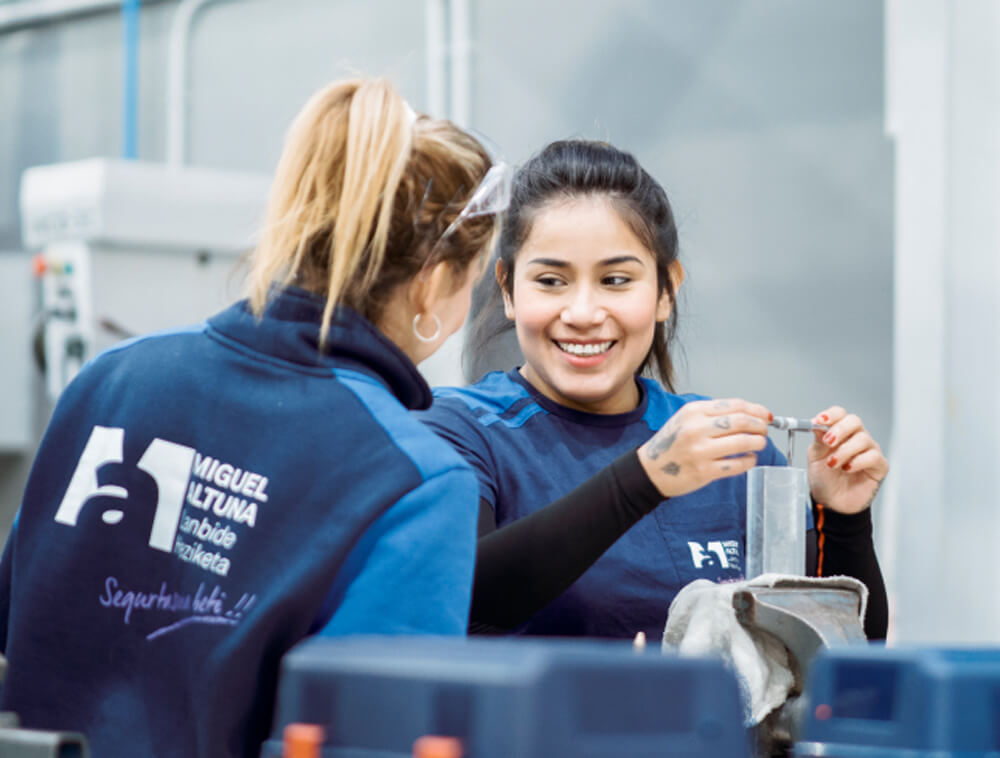
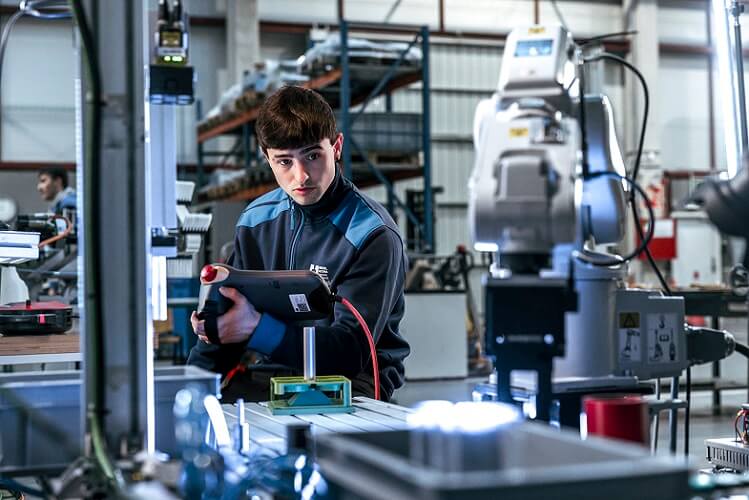
Delivery followed the ETHAZI1 challenge-based model, so learning stayed hands-on and collaborative. Short workshops (“nuggets”) introduced organisational mindsets (e.g., a Kiribil Laboratory2 — a mini-factory simulation where teams compare traditional vs high-involvement ways of organising work) and human–technology integration (e.g., AR support for manual assembly). Mixed-discipline teams then tackled projects — such as combining eco-design with automation or designing and manufacturing a levelling device — while also working with advanced tools like UR robots, digital planning and simulation. Internships were aligned to reinforce what students practised in the Learning Factory.
Next steps
Building on the pilot, the next phase is to strengthen cross-module integration, expand professional development for trainers, and agree a practical assessment toolkit for Industry 5.0 outcomes that can be used across Learning Factory programmes.
Discover more case studies