
Factories are investing heavily in Industry 4.0 tools—dashboards, sensors, automated quality checks—yet many teams still struggle to get lasting value from them. At ERREKA (Matz Erreka), the question wasn’t whether the technology worked. It was whether the organisation was set up so people could use it confidently, every day, to make decisions and solve problems.
The Teaching Factory intervention in Erreka, before and after.
What the intervention set out to do
Instead of running another technical training for operators, the intervention focused on the conditions that make empowerment real: attitudes, behaviours, and everyday management practices. The underlying idea was simple—when people have the autonomy, support, and clarity to act on what the data shows, existing automation starts to pay off. The work emphasised a more human-centred way of running the organisation and building resilience (the ability to adapt when problems arise), with sustainability expected to improve indirectly as decisions and routines get better.
Who took part
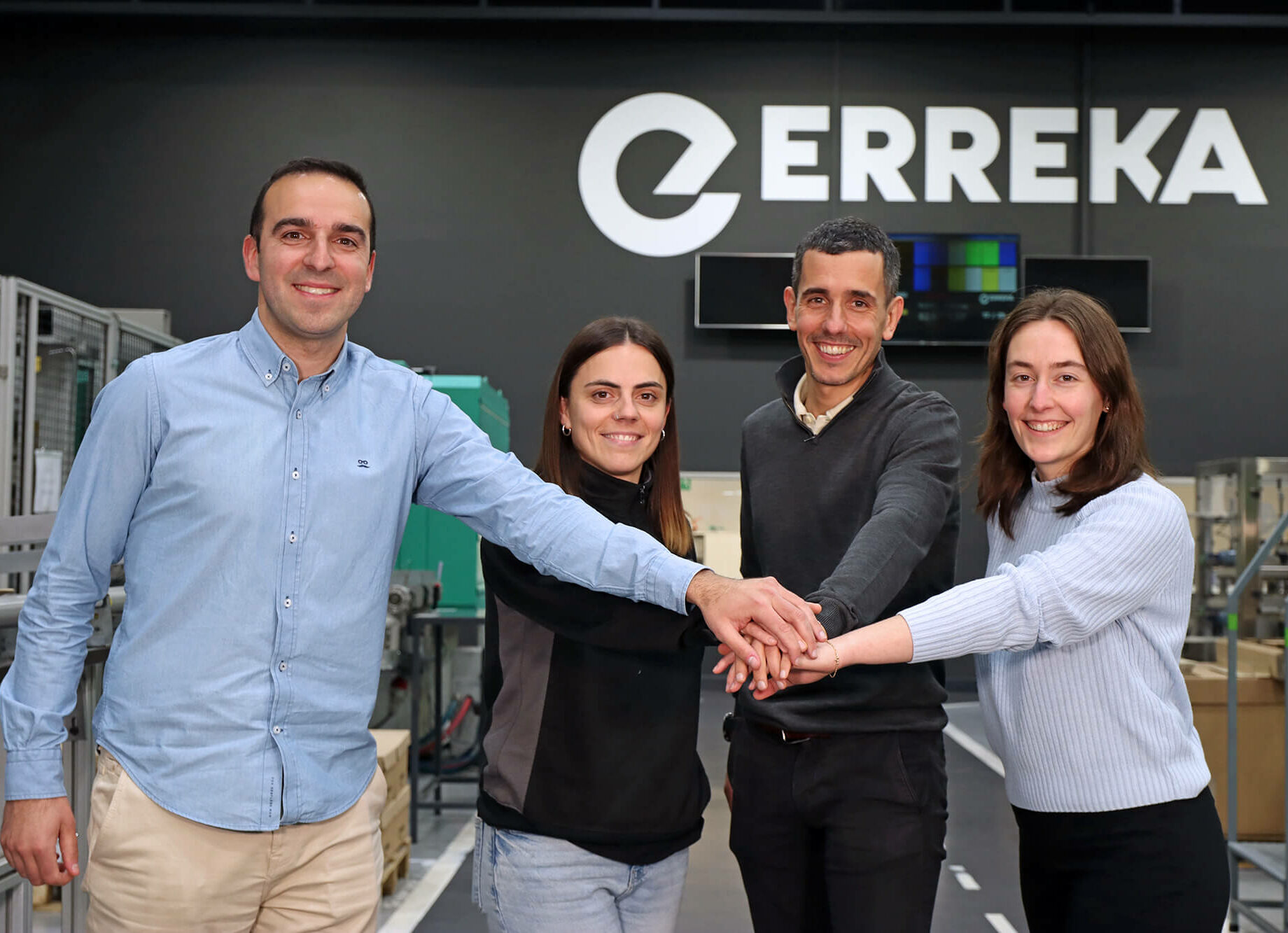
Led by Unai Elorza of Mondragon University as part of the HORIZON Bridges 5.0 project, the main focus of the Teaching Factory was on the people who shape how work gets done: managers and engineers/technicians. At ERREKA, a small mixed group from these roles joined the sessions, reflecting the premise that technology adoption lives or dies in day-to-day leadership decisions—how roles are defined, how problems are handled, and who is trusted to act.
The real barrier: not capability, but the way work is organised
In this view, “low value from installed technology” is a signal of a wider organisational issue. If people are not expected—or enabled—to interpret information, make decisions, and follow through, then even good tools sit unused. The intervention therefore concentrated on managerial awareness and workplace practices that support an empowered role on the shop floor, so data and automation become part of everyday problem-solving.

What the sessions actually did
The programme blended short learning inputs with facilitated discussion and practical problem framing. It began by helping participants notice how management choices shape collective behaviour—including a “mirroring effect,” where people’s behaviour reflects the conditions they experience. From there, managers worked on critical thinking skills: naming current routines, surfacing the assumptions behind them, and considering how those routines influence autonomy, engagement, and the willingness to use new tools.
Designed with the company, not for the company
The sessions were shaped together with ERREKA’s management and by feedback (for example, what to emphasise and how to fit the timing to operational constraints). Where it made sense, conversations moved beyond awareness into human-centred organisational redesign: adjusting routines so participation, autonomy, and meaningful roles are supported—so technology strengthens empowered work instead of simply digitising old habits.
When it happened
The work ran through late 2024, with a baseline snapshot taken in September 2024 and a follow-up in December 2024 to check what had changed after the intervention. The wider Mondragon effort also points to the importance of longer-term follow-up, since shifts in empowerment and culture take time to show up in daily practice.
What “good” looked like
Success meant managers leaving with a stronger ability to create the conditions for people to act: clearer decision rights, more participation in problem-solving, and jobs designed around responsibility—not just compliance.
This focus also matches a broader lesson highlighted in Mondragon: rolling out monitoring, data collection, or automated quality tools is often the easy part; sustaining day-to-day use is where many initiatives stall. If those conditions improve, the practical expectation is straightforward: teams use the data and automation they already have more consistently, and technology becomes part of the normal way work improves.
This drop-off is linked to the way many technologies have been introduced historically: top-down. When people already feel disengaged, a top-down rollout can deepen the sense that change is being imposed rather than built together.
The result is not just low tool usage, but a growing gap between what Industry 4.0 promises and what teams experience on the shop floor. That is why the ERREKA work put managers at the centre: the point was not to “teach the technology,” but to change the everyday system around it so people can take ownership.
In practice, sessions were held in a meeting room—away from the immediate pressure of daily decisions—to make reflection possible. Participants were mainly managers, alongside some engineers, and the “step back” helped people discuss organisational routines that are hard to question in the flow of production.
A recurring theme was language and mindset. Managers may recognise the human side of work yet still slip into treating people primarily as “resources.” Participants valued time to examine these habits, with the expectation that greater awareness would show up in concrete choices—how roles are designed, how assembly lines are organised, and how decisions are made when introducing new tools.
The takeaway is that this kind of leadership-focused work needs to happen more often and at larger scale, even if time is scarce. The open question is how to make it accessible to more companies—including whether some elements can be delivered remotely.
Put together, ERREKA’s Teaching Factory work and the Mondragon perspective point to the same lesson: digital tools deliver value when leadership and organisational design evolve alongside the technology. When people are trusted, supported, and expected to act on what the data shows, Industry 4.0 stops being a “project” and becomes the way improvement happens.
Discover more case studies