

Peter Totterdill
Workplace Innovation Europe Ireland
Industry 5.0 calls for a different kind of learning because the nature of work is changing in ways that traditional education and training do not fully address.
Why a different type of learning is needed
Earlier industrial models often assumed that workers would perform stable, clearly defined tasks and that learning could focus mainly on technical knowledge and routine procedures.
Industry 5.0 is different. It is shaped by rapid technological change, the spread of AI and digital systems, and a stronger emphasis on human-centred, sustainable, and resilient production. That means workers and students need more than narrow technical competence.
They increasingly need opportunities to develop:
- adaptability, because roles and tools change quickly
- problem-solving in real contexts, not just in textbook examples
- collaboration across disciplines, since innovation often happens between functions rather than inside one specialism
- judgement and autonomy, especially where people work alongside advanced technologies rather than simply follow instructions
- continuous learning habits, because learning can no longer stop once someone enters employment
In other words, Industry 5.0 requires learning that is situated, participatory, interdisciplinary, and ongoing. Students and workers need to learn how to respond to complexity, uncertainty, and change—not just how to perform predefined tasks.
How the BRIDGES 5.0 Teaching and Learning Factory interventions help
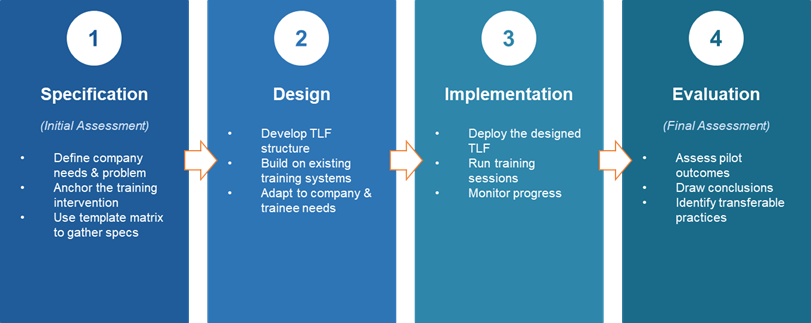
The BRIDGES 5.0 Teaching and Learning Factory (TLF 5.0) interventions contribute by creating learning environments that connect education, workplace practice, and innovation more directly.
Rather than separating learning from real work, these interventions bring learners into contact with authentic industrial and organisational challenges. This helps participants build the kinds of capabilities Industry 5.0 requires.
Their contribution can be understood in several ways:
- Learning through real-world challenges
TLF interventions are designed around practical problems and workplace situations, allowing learners to engage with the kinds of complexity they will face in real settings. This moves learning beyond abstract instruction and helps develop confidence in dealing with ambiguity.
- Linking technical and human capabilities
Industry 5.0 is not only about mastering new technologies; it is also about using them in ways that support people, meaningful work, and organisational resilience. The BRIDGES 5.0 approach therefore helps learners combine technical understanding with soft skills, reflection, teamwork, and human-centred thinking.
- Supporting interdisciplinary collaboration
The interventions bring together different actors—such as students, workers, educators, managers, and other stakeholders—so that learning reflects the collaborative nature of modern innovation. This helps participants understand different perspectives and work across boundaries.
- Encouraging active and participatory learning
Instead of treating learners as passive recipients of knowledge, Teaching and Learning Factories involve them in co-creation, experimentation, and reflection. This is especially important in Industry 5.0, where workers are expected to contribute ideas, shape change, and use their judgement.
- Building capacity for lifelong learning
Because Industry 5.0 environments continue to evolve, the most valuable learning outcome is often not a single skill but the ability to keep learning. TLF interventions help foster curiosity, adaptability, and the confidence to engage with new technologies and new forms of work over time.
In summary
Industry 5.0 requires a broader and more dynamic model of learning because work is becoming more complex, technology-rich, collaborative, and human-centred. Workers and students need learning opportunities that prepare them not just to do a job, but to adapt, contribute, and grow within changing systems.
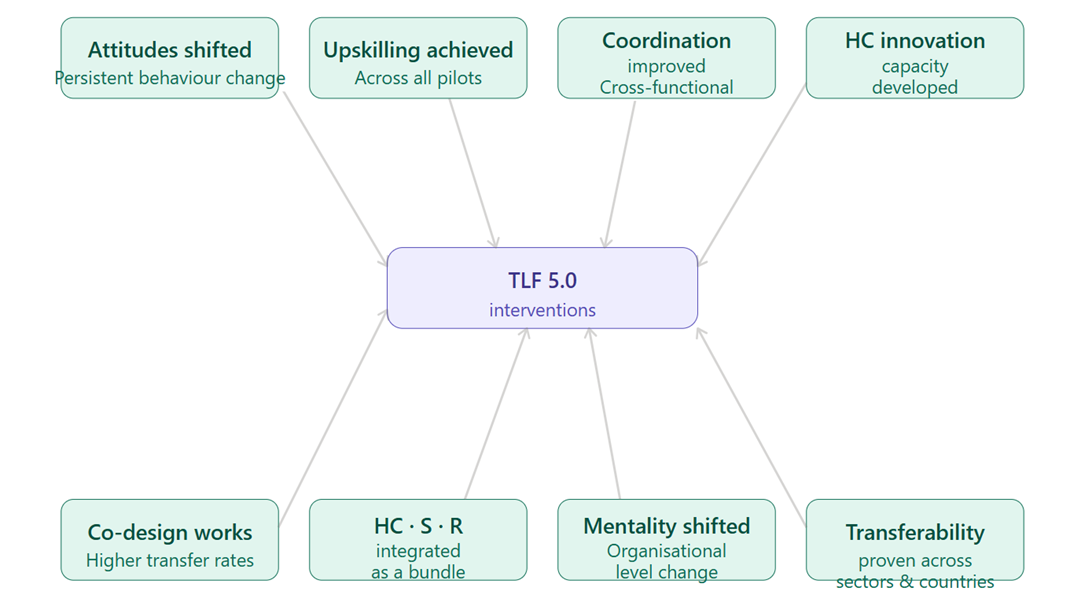
The TLF 5.0 interventions support this by offering practical, collaborative, real-world learning experiences that integrate technical, social, and reflective dimensions of capability. They help learners develop the adaptability, agency, and interdisciplinary understanding that Industry 5.0 demands.
Discover the case studies
Related articles

September 28, 2026

September 20, 2026

September 19, 2026

September 19, 2026
September 19, 2026